
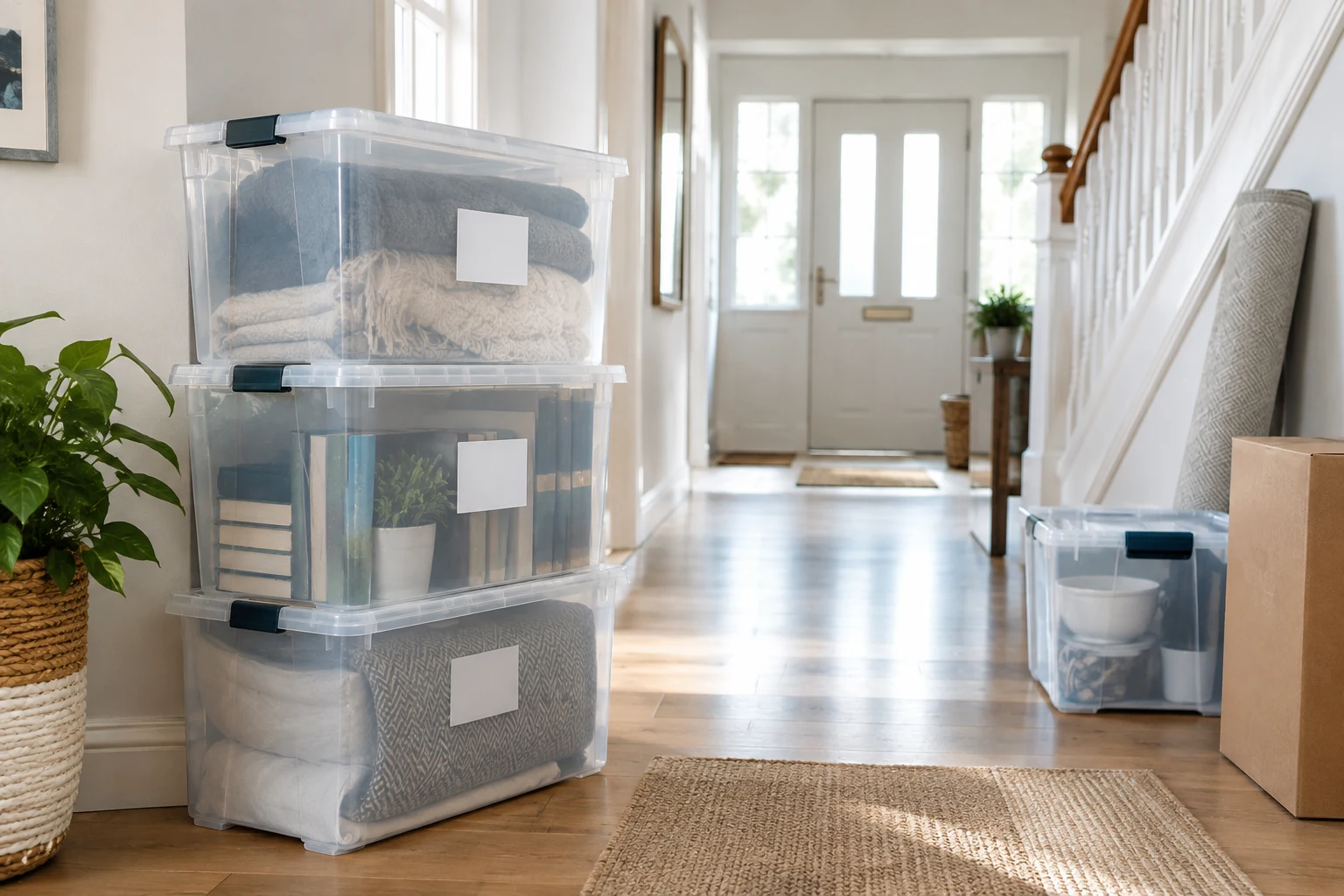
If you are moving from a home with cockroaches, assume that some belongings need checking before they enter the removal van. Cockroaches can shelter in narrow, dark spaces and may travel in furniture, kitchen equipment, electronics, paper and clutter. The most useful approach is to clean and inspect items as you pack, then keep them contained in sealed plastic bags or lidded boxes.
Do not wait until you reach the new property. Sorting items at the point of packing reduces the chance of moving pests from one box to another, and gives you an opportunity to discard things that are difficult to clean or inspect.
Start with the belongings most likely to shelter cockroaches
Give extra attention to items with crevices, warmth, food residue or long-undisturbed storage space. These include:
- kitchen cupboards, drawers, tables and other furniture;
- small kitchen appliances, such as toasters, coffee machines, blenders and microwaves;
- larger appliances, including fridges and ovens;
- computers, phones, clocks and other electronic equipment;
- bookshelves, picture frames, mirrors, brooms and mops;
- stacks of papers, magazines, books and cardboard; and
- clothes, bedding, rugs and other fabrics, especially items stored on the floor or left unused for a long time.
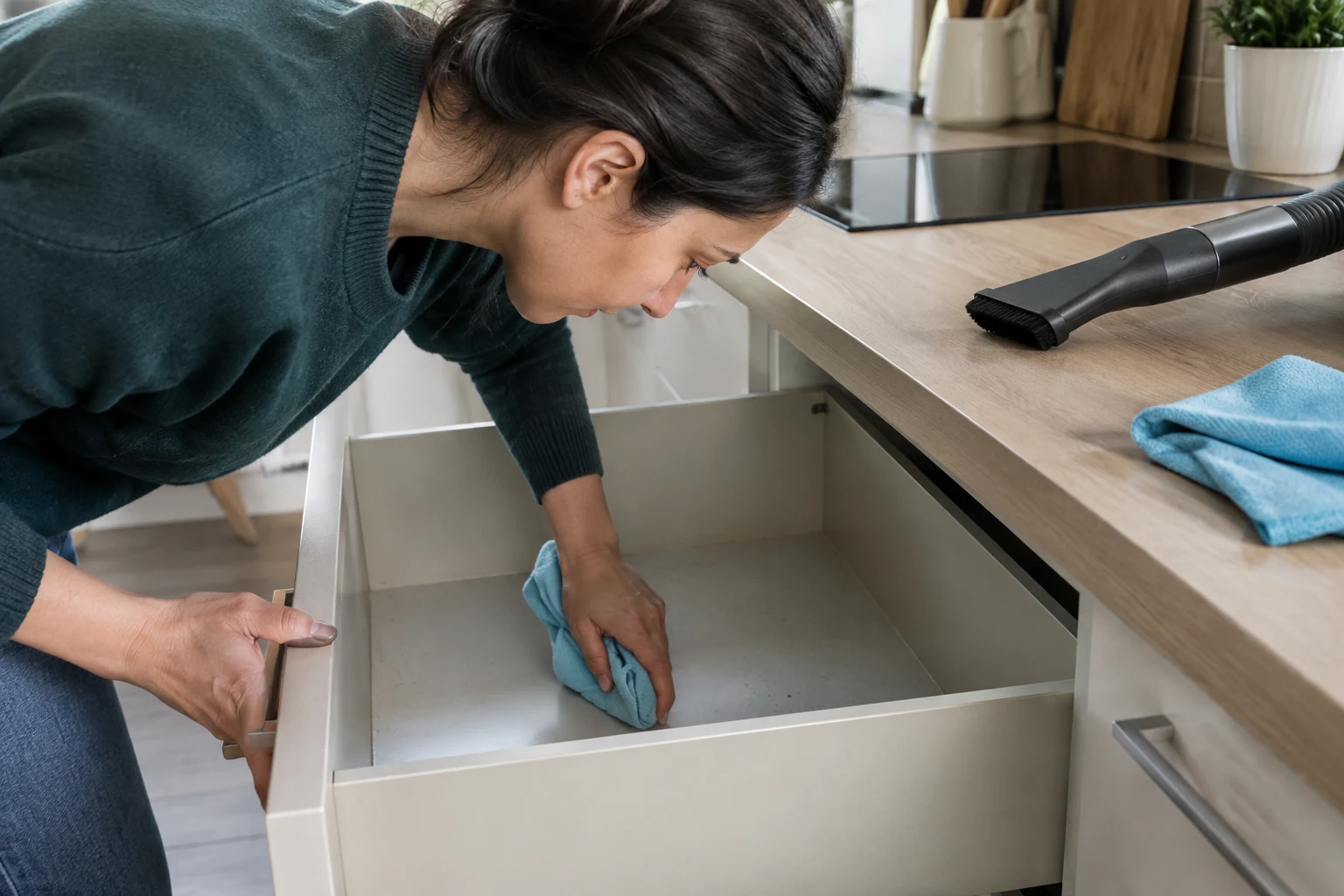
Take one item at a time where possible. Check joints, undersides, drawer runners, folds, handles and openings. Empty drawers completely rather than moving them full. Outside or in a well-lit, clear area, gently shake out loose items and vacuum seams and gaps. Empty the vacuum promptly and dispose of its contents securely, rather than carrying debris into the new home.
Clean before you pack
Cleaning is not simply about making belongings presentable for the move. Food crumbs, grease and damp residue can provide both a hiding place and a reason for pests to remain with an item.
Wash fabrics and soft furnishings where practical
Launder clothing, towels, bedding and washable rugs before packing them. Make sure they are fully dry before sealing them away; trapping damp fabric in storage can create a separate problem. For items that cannot be washed, inspect folds, seams and pockets carefully and vacuum them if suitable.
Empty and clean kitchen items
Wash pots, pans, utensils and food-storage containers before packing. Remove food from cupboards and drawers, then clean up crumbs and residue before inspecting the empty spaces. It is sensible to avoid taking open food packets from an infested property where possible; sealed food containers are easier to inspect and keep separate.
Handle appliances with care
Unplug appliances before cleaning or inspecting them, and follow their care instructions. Crumb trays, removable parts and external gaps are sensible places to check. Do not pour liquids into electrical equipment or apply insecticide inside an appliance unless its manufacturer specifically permits it. If you suspect pests are inside a costly or complex appliance, professional advice is safer than trying to dismantle it yourself.
Choose packing that limits hiding places
Cardboard boxes and piles of paper can offer cockroaches places to hide. If you are dealing with an active infestation, use clean plastic storage boxes with close-fitting lids for as much as possible. Clear boxes make a later inspection easier.
Place smaller belongings, electronics and cleaned appliances in sealed plastic bags before putting them into larger containers. This adds a barrier and helps keep an issue confined if you later spot signs of cockroaches. Label containers clearly, particularly those containing kitchen items and electronics, so they can be unpacked and checked in an orderly way.
Avoid reusing cardboard that has been stored in the affected home, and do not bring in second-hand boxes of unknown origin for this move. Keep packing materials tidy rather than leaving open boxes around for days.
Do not rely on spraying or on extreme temperatures
Spraying belongings at random can drive cockroaches deeper into gaps or cause them to scatter into other items. It also risks damaging furniture, fabrics and electrical equipment. Similarly, attempting to heat or freeze possessions outdoors is unreliable in ordinary moving conditions and may damage the items.
If an infestation is established, arranging treatment for the current home before or during the move may be the more sensible route. A pest-control professional can assess the extent of the problem and advise on belongings that need particular attention. This is especially useful for appliances, fitted furniture and substantial quantities of stored paper.
Set up the new home to make monitoring easier
Before the removal boxes arrive, clean food-preparation areas and make space to unpack kitchen goods without piling them on the floor. Keep food in sealed containers and clear away crumbs and spills promptly. Check under sinks and around appliances for moisture, and deal with leaks or standing water.
As you unpack, inspect high-risk boxes first rather than storing them unopened. Put paper and cardboard packaging straight into recycling or rubbish once it is no longer needed. Sticky monitoring traps placed in discreet areas can help reveal whether cockroaches have arrived, but they are primarily a way to detect activity rather than a complete solution to an infestation.
Reduce the chance of a new infestation
Once settled, keep kitchens and bathrooms clean and dry, store food securely and avoid allowing clutter to build up around appliances and cupboards. Check gaps around pipes, skirting and other service openings, particularly in flats where pests may move between neighbouring spaces. Where appropriate, closing visible gaps can reduce available routes and hiding places.
If you see cockroaches or repeated signs of activity after moving, act promptly. Keep affected belongings separate, avoid moving them from room to room, and seek professional pest-control help rather than allowing the problem time to spread.