
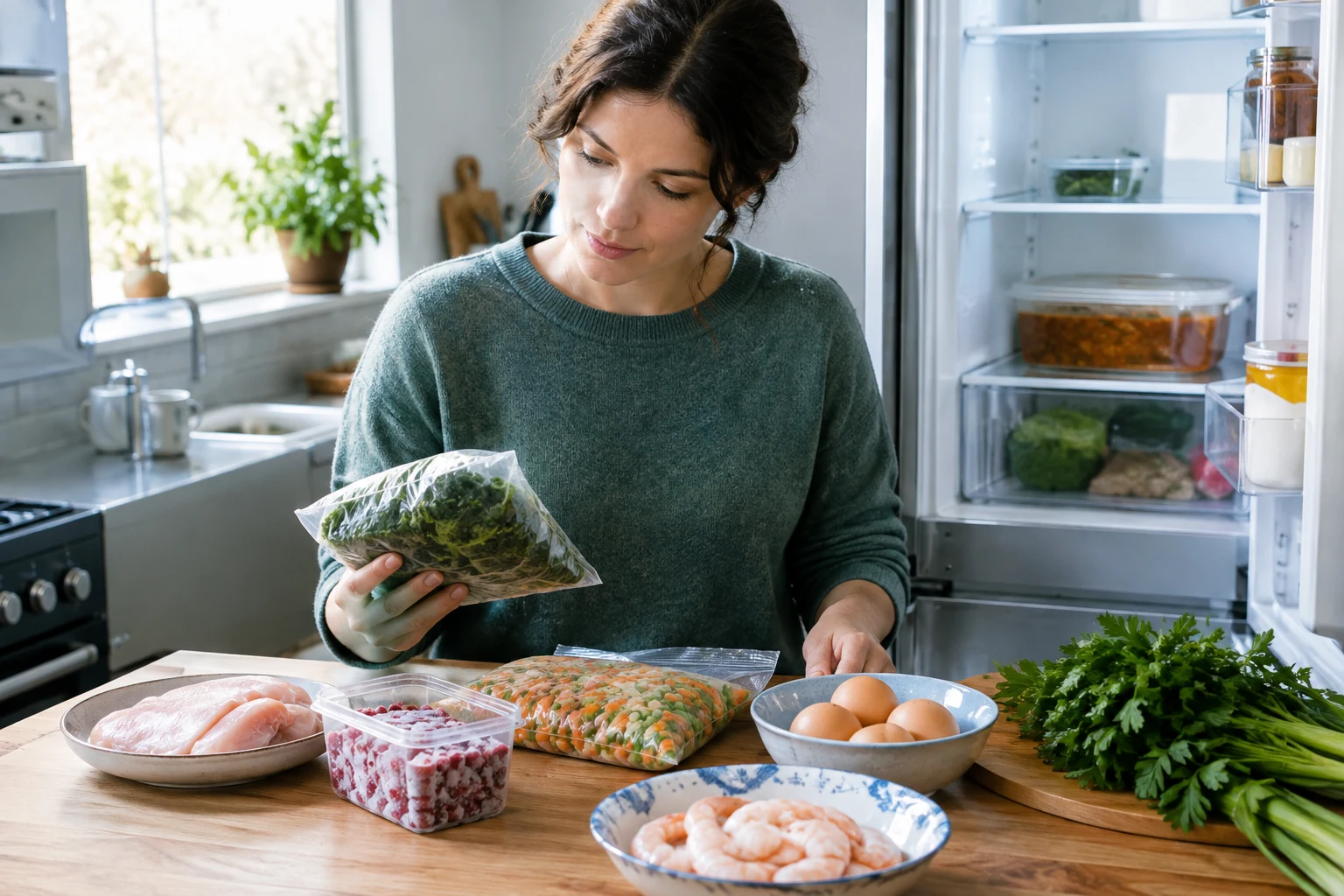
Whether food can go straight from the freezer into a pan or oven depends on what it is and whether it was prepared for cooking from frozen. Raw chicken, sausages, mince, most seafood and large homemade dishes should generally be defrosted first. Bread, many commercially frozen vegetables, fruit and products with clear cook-from-frozen instructions are more straightforward.
The key distinction is between food designed and portioned for cooking from frozen and food frozen at home, where size and shape can make heating less predictable. If the packet gives cooking instructions, follow them; if it does not, thaw raw meat and seafood thoroughly before cooking.
Foods to defrost before cooking
Raw chicken
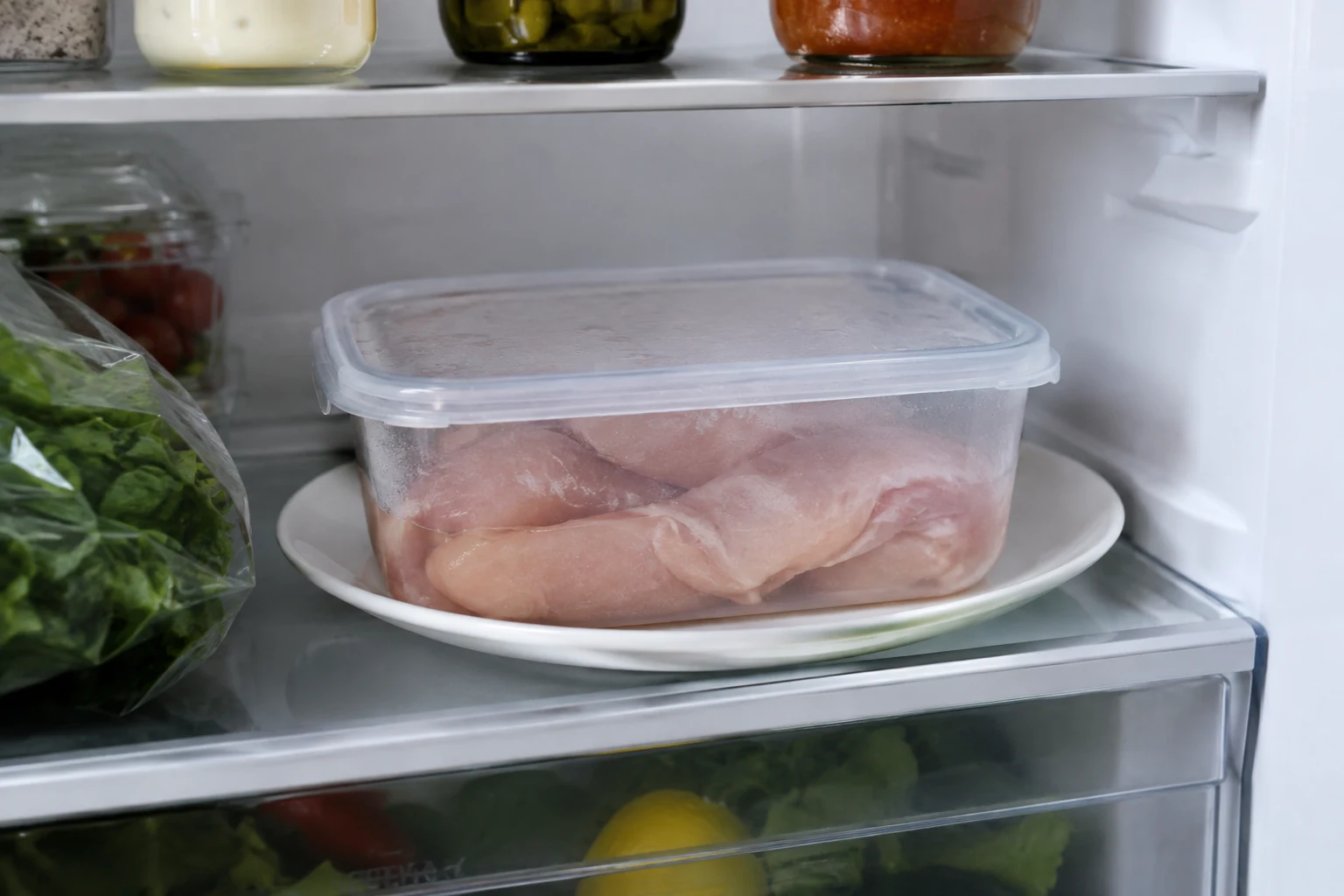
Defrost raw chicken thoroughly before cooking unless its packaging specifically says it can be cooked from frozen. A frozen or partly frozen piece may cook unevenly: the outside can look ready while the centre is still undercooked. Thaw it in the fridge, in a container to catch drips, rather than on the worktop. This can take 24 hours or longer, so allow time.
If you need to cook it straight after thawing, use the microwave’s defrost setting and cook it immediately. Do not wash raw chicken, as splashes can spread bacteria around the kitchen. Cook until piping hot throughout; a food thermometer can help check that the thickest part reaches 75°C.
Sausages and mince
Home-frozen sausages and mince are dense, and a frozen centre can make it harder to cook them evenly. Thaw them fully in the fridge, or use a microwave defrost setting if you are ready to cook immediately. Keep thawing food covered and on a plate or in a container to contain any drips. Once thawed, cook sausages until steaming hot all the way through.
For easier portioning, separate sausages or mince before freezing. That way, you can thaw only what you need rather than trying to prise apart a solid block.
Prawns, shellfish and home-frozen fish
Most prawns and shellfish should be thawed before cooking, unless the packet gives tested instructions for cooking from frozen. Otherwise, the outside can overcook before the centre is hot. Defrost covered in the fridge, or use the microwave’s defrost setting and cook straight away. Do not rinse raw seafood in the sink; splashes can contaminate nearby surfaces.
Apply the same caution to fish fillets frozen at home: thaw them in the fridge before cooking. A commercially packaged frozen fish product may be cooked from frozen if its instructions say so.
Large homemade meals
Thaw dense or layered dishes such as lasagne and cottage pie before cooking. Their size and ingredients can make it difficult for heat to reach the middle at the same rate as the edges. After cooking, check that the whole dish is steaming hot, not just the surface. When freezing portions, smaller, evenly sized servings are easier to thaw and heat through than one large container.
Five things that can go straight from the freezer
- Sliced bread and rolls: Toast bread from frozen, allowing extra time. Rolls can be heated in an oven or under a grill.
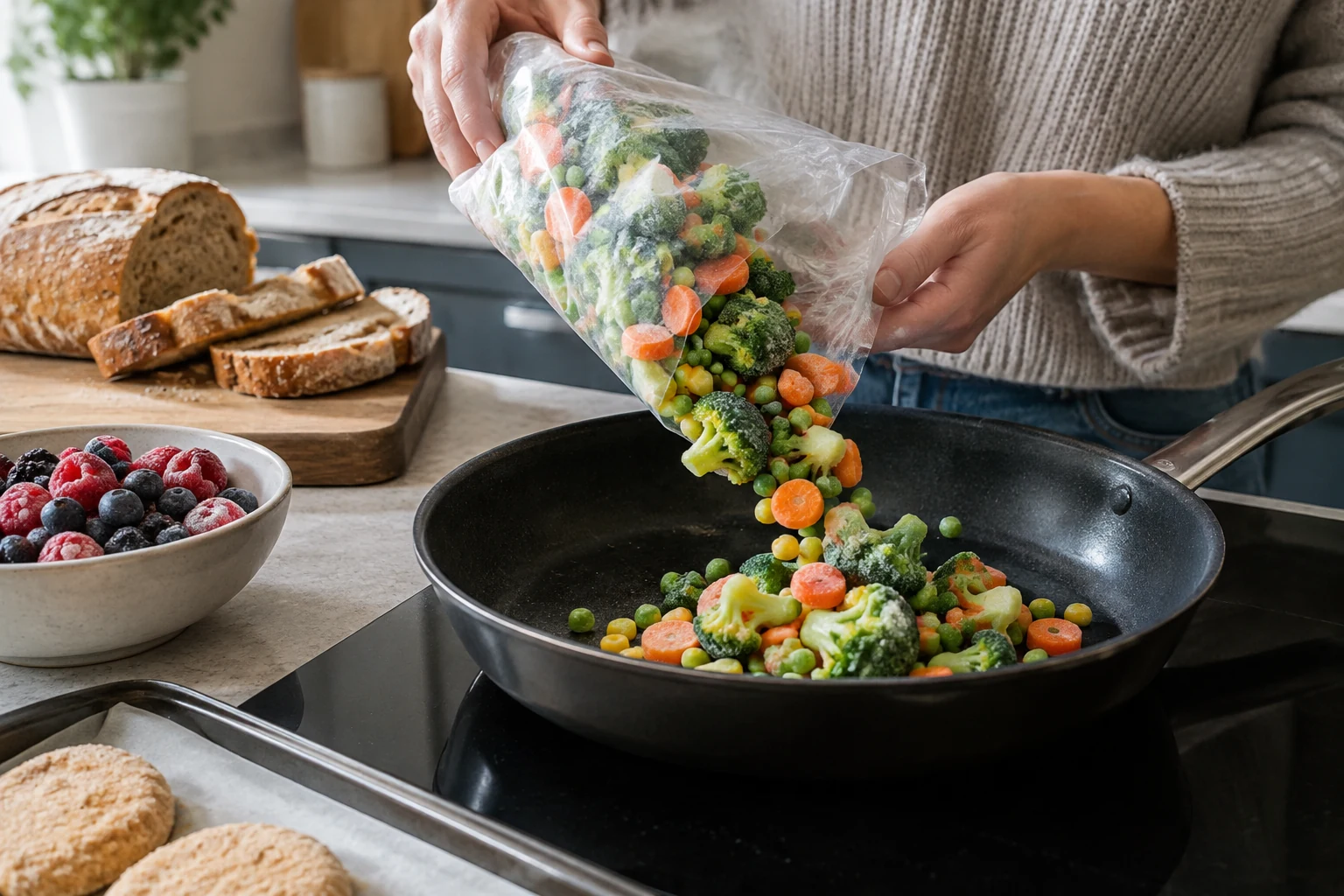
- Many frozen vegetables: Peas, carrots and mixed vegetables can usually go straight into boiling water, a steamer or a stir-fry. Follow the packet instructions. Vegetables with a high water content, such as lettuce and cucumber, tend to become soft after freezing and are not a good choice for fresh salads.
- Frozen herbs: Add them directly to sauces, curries and stews. Their texture may be too soft for a fresh garnish after freezing, so use them in cooked dishes.
- Packaged ready meals, pies and similar foods: Cook from frozen only when the packaging says to, and follow its time and method. Those instructions are intended for that specific product and portion.
- Soft fruit: Frozen berries, cherries and mango can go into a pan for a sauce, compote or crumble without thawing. They soften more quickly than fresh fruit as they cook.
A note on frozen cream
Single and double cream can be frozen for use in cooked dishes, but it is not a reliable ingredient to add solid and frozen straight to a hot pan. Once thawed, it may separate or become lumpy, so use it in cooking rather than as a fresh topping. When adding it to a sauce, take the pan off direct heat first and warm it gently to reduce the chance of it splitting.
Safer thawing habits
- Use the fridge: Put food in a covered container or on a plate to catch drips. Keep raw meat, poultry and fish below other foods so they cannot drip on to them.
- Use the microwave only when cooking straight away: Defrost settings can thaw food quickly, but the food should be cooked promptly afterwards.
- Freeze food before its use-by date: Label it with what it is and the date it went into the freezer, so you can identify it and use it in good time.
- Keep raw food and ready-to-eat food apart: Wash hands and clean any surfaces or utensils that have been in contact with raw meat or seafood.
When in doubt, check the packaging. A product labelled for cooking from frozen is different from a similar food that has been portioned and frozen at home. For raw foods without clear instructions, thawing thoroughly first makes it easier to cook them evenly.